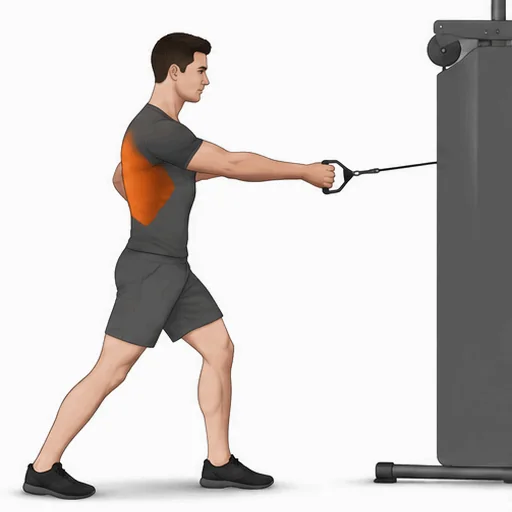
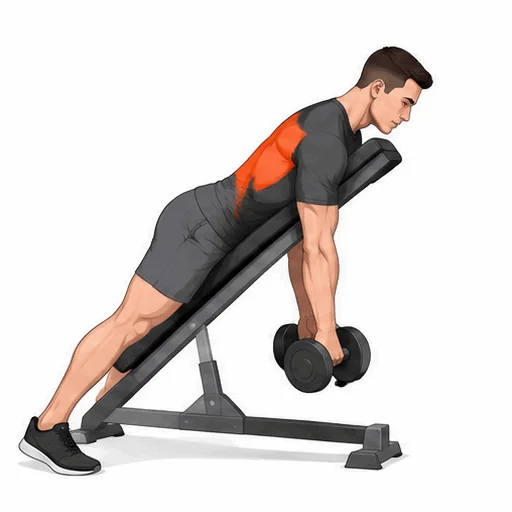
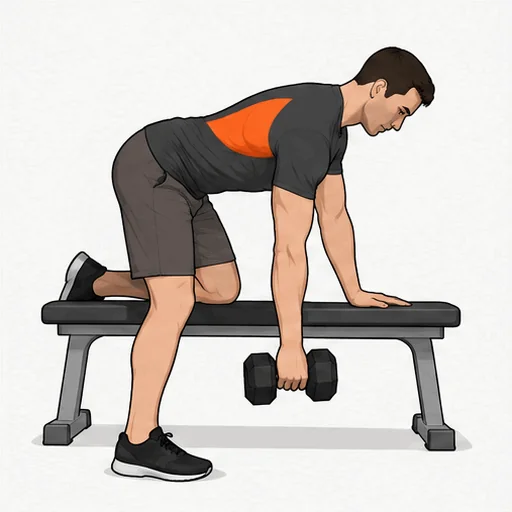
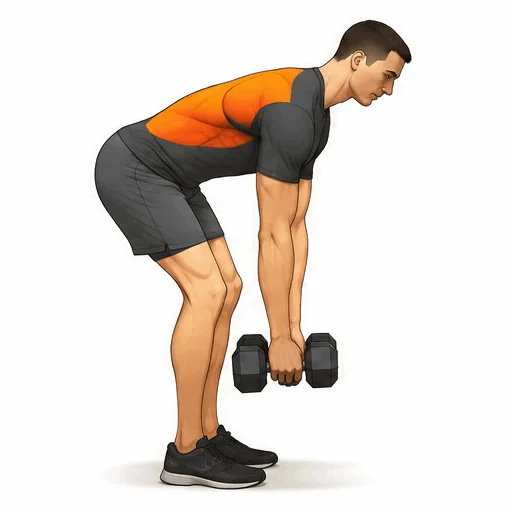
The single-arm cable row is the closest alternative on cables; with dumbbells, the chest-supported dumbbell row is the closest because your body stays still on the bench.
Hold a dumbbell in each hand, palms facing each other, feet hip-width apart.
Bend your knees slightly and hinge at the hips until your torso is at about 45° or lower, back flat.
Pull both dumbbells toward your lower ribs, elbows close to your body.
Lower them slowly until your arms are straight, keeping the same torso angle.
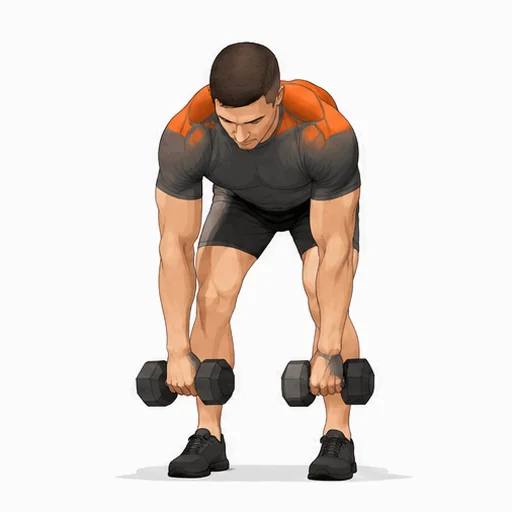
Dumbbell Wide-elbow Row
Keeps: Horizontal row
Changes: Elbows wide: more upper back and rear delts
Upper Back · Rear Delts
DumbbellNo bench3 × 8–12
How to
Hold a dumbbell in each hand, palms facing behind you, and hinge forward until your torso is close to parallel with the floor.
Let the dumbbells hang below your shoulders.
Pull the dumbbells up toward your upper ribs with your elbows pointing out to the sides.
Lower them slowly until your arms are straight.
How to choose
Pick the chest-supported row if you want your lower back to rest, the one-arm dumbbell row to lift heaviest, and the wide-elbow row to work your upper back and rear delts more.
Single-arm Cable Row: Row on a cable
Chest-supported Dumbbell Row: Row with dumbbells
Dumbbell Row: Row with dumbbells
Dumbbell Bent-over Row: Row with dumbbells
Dumbbell Wide-elbow Row: Row with dumbbells
FAQ
What muscles does a seated cable row replacement need to work?
Your upper back and lats, with help from your biceps and rear delts; every row on this page trains them.
Can I do rows at home?
Yes: the dumbbell bent-over row and wide-elbow row need only a pair of dumbbells.